

Rural Health Care Takes the National Stage
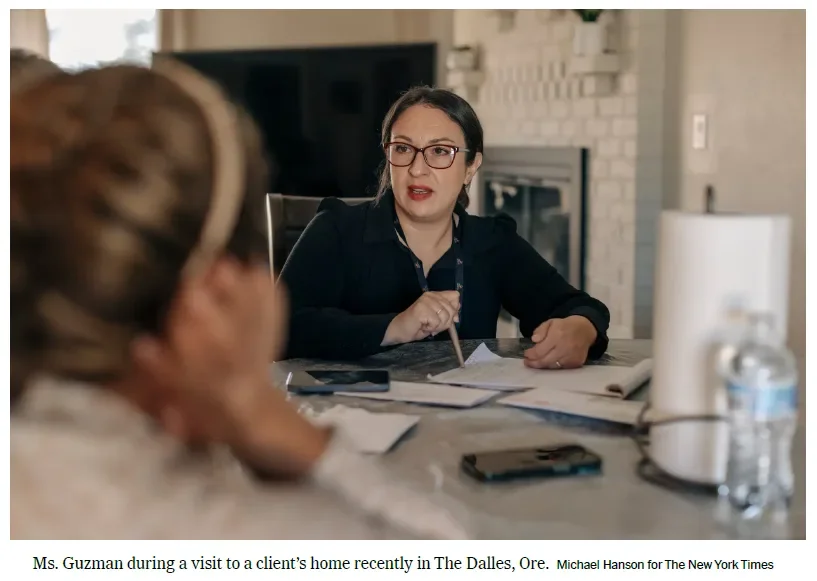
A recent New York Times article brings national attention to the real-life challenges and quiet successes of rural health care, using Oregon’s Columbia Gorge as its lens. The story features Sandy Guzman, Community Health Worker for One Community Health’s Connected Care program, whose work highlights how deeply health is connected to housing, transportation, income, and human connection.
The Connected Care Pilot Intervention pairs community health workers with primary care teams to support older adults in their homes. CHWs help deliver age‑friendly care by focusing on the 4Ms: What Matters to each person, Medication safety, Mentation by helping identify patient depression and dementia, and Mobility. This approach helps align care with patient goals while supporting mental health, safer medications, and physical independence.
Through Sandy’s day-to-day visits with older adults in the Gorge, the article shows what rural health care truly looks like on the ground. Many patients face isolation, limited mobility, rising housing costs, and long distances to care. Some live on fixed incomes and must choose between rent, utilities, food, and medical needs.
As a Community Health Worker, Sandy builds trusted relationships with patients in their homes. She helps connect them to transportation, housing support, food access, and mental health services. Sometimes the work is logistical. Other times, it is simply listening, offering reassurance, and helping someone feel less alone during a difficult moment.
Research highlighted in the piece shows that when people receive consistent, personal support at home, emergency room visits and hospital stays decrease. This improves quality of life while also lowering health care costs and making donor support more effective.
By featuring Sandy’s work and the patients she serves, the New York Times places rural communities like ours on a national stage. It reframes rural health care as essential, not secondary, and shows why programs like Connected Care are critical to the health of small towns across the country.
This recognition underscores what donors already help make possible every day at One Community Health: care that meets people where they are, honors their dignity, and supports the whole person, not just a diagnosis.
You can donate to help support your rural communities surrounding the Columbia Gorge by going to our Give page.
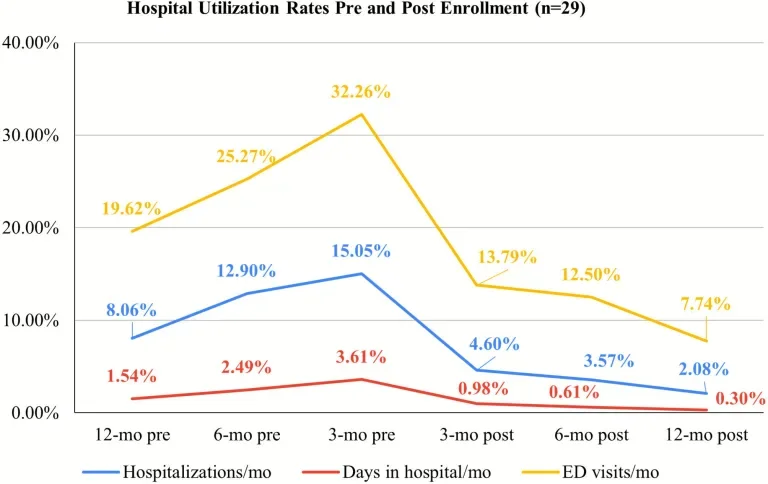
Further supporting this New York Times article, The Journal of the American Geriatrics Society, or AGS, did a study evaluating pilot study called Connected Care for Older Adults. This study is a rural Oregon program pairing Community Health Workers (CHW) with primary care to support older adults at home. It enrolled 388 patients across 7 clinics; average age was 77 and 63% were women. Nearly half had an ER visit and 34% were hospitalized in the prior year. After about 90 days, 95% of patients said it helped, and 100% of responding clinicians were very satisfied. The model improved support and engagement, with early signs of fewer ER visits.
You can read more about this study on the AGS website here.